Neura Robotics— Cognitive humanoid and industrial robots.
Cognitive robotics company building intelligent humanoid and collaborative robots that combine sensing, perception, and AI to work safely alongside humans.
Notable milestones from Neura Robotics’s journey — funding rounds, launches, and other moments worth knowing.
partnership
NEURA takes Physical AI into Germany's critical power grid
NEURA partnered with E.ON and enviaM to develop robotic skills for inspecting substations, monitoring grid assets and assisting with hazardous or repetitive work. The partners will train those skills at TUM RoboGym before MITNETZ STROM, one of eastern Germany's largest distribution-grid operators, begins real-world pilots in 2027.
4NE1 completes a live, autonomous laundry cycle at GTC Berlin
At NVIDIA GTC Berlin, NEURA's wheeled 4NE1 humanoid repeatedly completed an end-to-end laundry workflow live and without human intervention: sorting garments, loading a washing machine, then moving them to a dryer. The approximately 11-minute sequence was the first public demonstration of Neuron AI operating a multi-step household task with vision, touch, sound and memory.
NEURA and TUM open a €17M Physical AI training centre
NEURA and the Technical University of Munich opened the 2,300 m² TUM RoboGym near Munich Airport, where companies and researchers train robots on industrial tasks using real-world data, demonstrations and simulation. NEURA unveiled the serial-production-targeted 4NE1 Gen 4 at the opening; the humanoid is 20% lighter than its predecessor and runs on Neuron AI.
The Munich RoboGym combines industrial task data, human demonstrations and simulation to train robots.
NEURA launches Neuron AI for its Physical AI robot fleet
NEURA introduced Neuron AI, a multimodal perception-language-action foundation model that combines 3D vision, touch, sound, proprioception, language and memory across five robot form factors. At NVIDIA GTC Berlin, its 4NE1 humanoid completed an 11-minute sequence of household tasks autonomously, marking the model's public debut.
NEURA enters healthcare with a dedicated Physical AI unit
NEURA formed NEURA HealthTech to take its connected robotics stack into healthcare and life sciences, beginning with an autonomous platform for moving empty beds and sterile goods through hospitals. The company says a facility running about 20 bed moves a day could recover more than 1,300 staff hours annually; deployments will be offered through Robotics-as-a-Service partners.
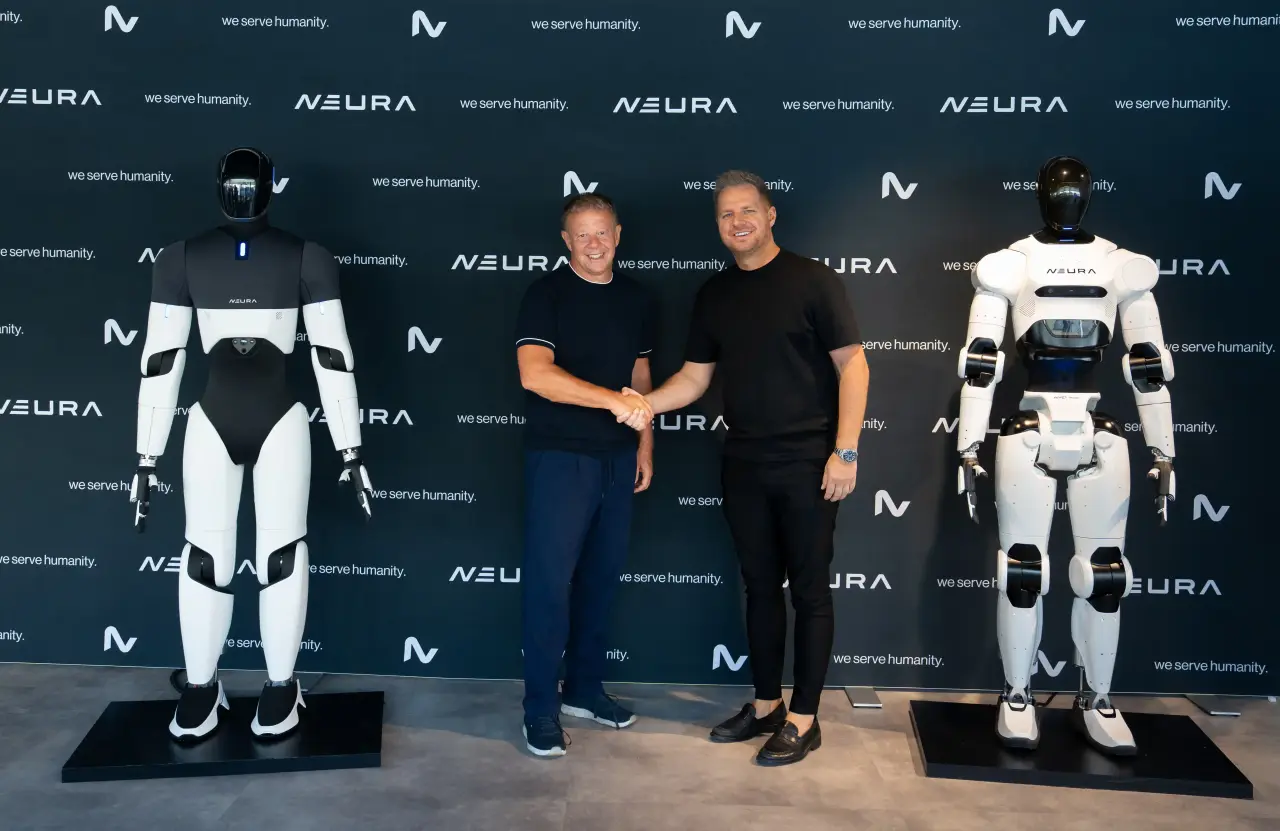
NEURA partnered with Italian edge-AI company SECO to design, engineer and manufacture the electronic compute modules for its cognitive robots, including humanoid 4NE1. The companies will also combine industrial production data with NEURA's Physical AI stack for semiconductor and electronics automation, linking robot hardware to scalable European manufacturing.
NEURA takes ADLATUS from partner to wholly owned cleaning-robotics unit
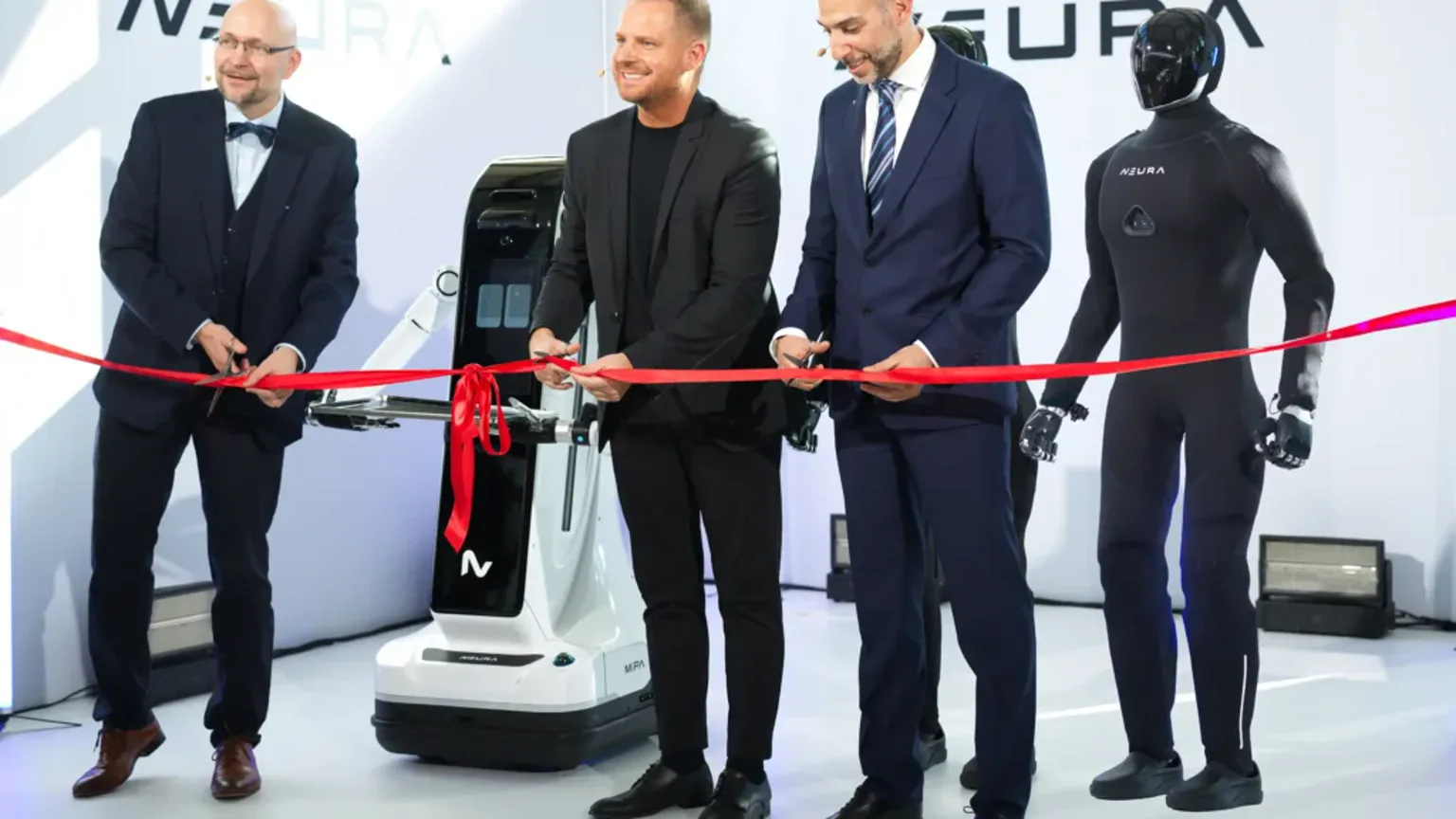
NEURA Mobile Robots acquired 100% of Ulm-based ADLATUS Robotics, adding hundreds of installed autonomous cleaning systems and its navigation software to the group. The company plans to add sensors and Physical AI to the platform and connect it to Neuraverse, extending its shared robotics stack into professional cleaning.
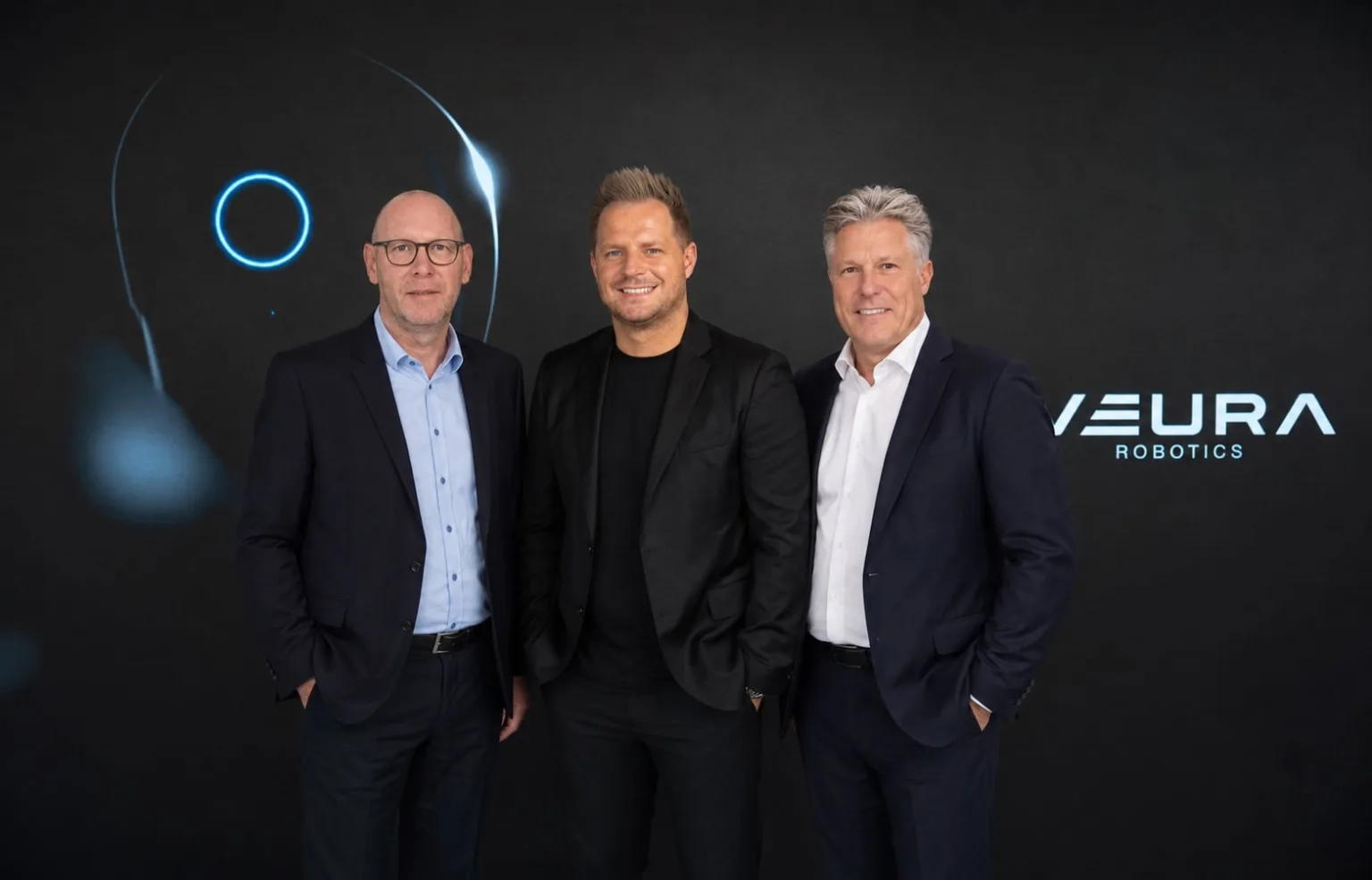
ADLATUS, NEURA Robotics and NEURA Mobile Robots leaders at the acquisition announcement.
NEURA acquires Bosch Rexroth's ACTIVE Shuttle platform
NEURA Mobile Robots will take over Bosch Rexroth's field-proven ACTIVE Shuttle automated guided vehicle, including its hardware, navigation and fleet-management software, on October 1. The acquisition adds autonomous intralogistics to NEURA's Physical AI ecosystem and brings the platform's technology toward the Neuraverse.
RWTH Aachen anchors NEURA's physical-AI training network
NEURA partnered with RWTH Aachen to open a 3,000-square-metre NEURA Gym at the university's Hightech Campus Melaten by the end of 2026. Around 20 RWTH institutes will use the facility to train and validate robots for industry, while five of NEURA's ten planned gyms are due to be operating across Europe, the US and China by year-end.
Neura secured one of Germany's largest startup financings, with Tether, Qualcomm, Amazon, Nvidia, Bosch, Schaeffler and the European Investment Bank among the backers. The round funds Neuraverse and robot-training gyms while Neura targets tens of thousands of humanoids in annual capacity next year.
Neura and AWS announced a strategic collaboration to train and deploy physical AI at fleet scale: AWS becomes Neura's preferred cloud provider, Neura Gym is set to integrate with SageMaker, and the companies will explore deployments in selected Amazon fulfillment centers.
Reportedly raising €1B with Tether at a ~€4B valuation
Bloomberg reported Neura was raising about €1 billion in a round backed by stablecoin giant Tether, valuing it near €4 billion — capital aimed at moving the 4NE-1 from R&D into large-scale industrialization, and making it Europe's best-funded humanoid bet.
Bosch signs on to bring humanoids to the production line
A strategic partnership with Bosch — joining names like Porsche, Schaeffler and Nvidia — lent Neura the kind of industrial engineering credibility few humanoid startups can claim.
White-label deals put Neura's tech inside Kawasaki, Omron and Delta
Rather than only sell its own robots, Neura licensed its cognitive platform to established industrial names, while a pilot with SAP wired the 4NE-1 into warehouse systems for autonomous picking — turning the thesis into real deployments.
€120M Series B — backed by an order book reportedly near €1B
Lingotto led the round with Volvo Cars Tech Fund, HV Capital and Vsquared joining. Neura framed it on a year of 10x revenue growth, a doubling to 300+ staff, and an order book it put around €1 billion — unusual traction for a humanoid maker.
Round
Series B
Raised
$123M
Led by
Lingotto Investment Management, HV Capital, Volvo Cars Tech Fund
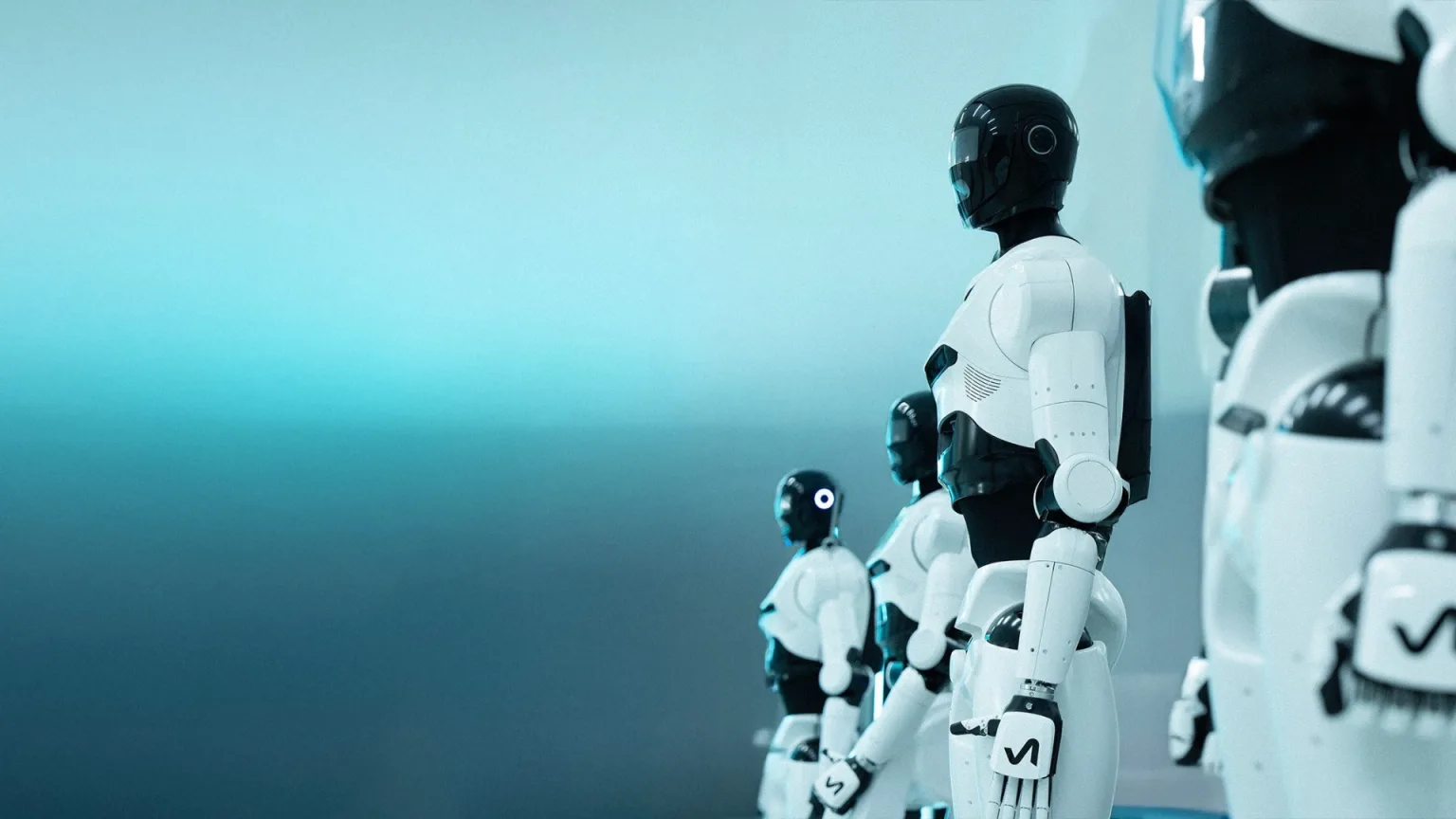
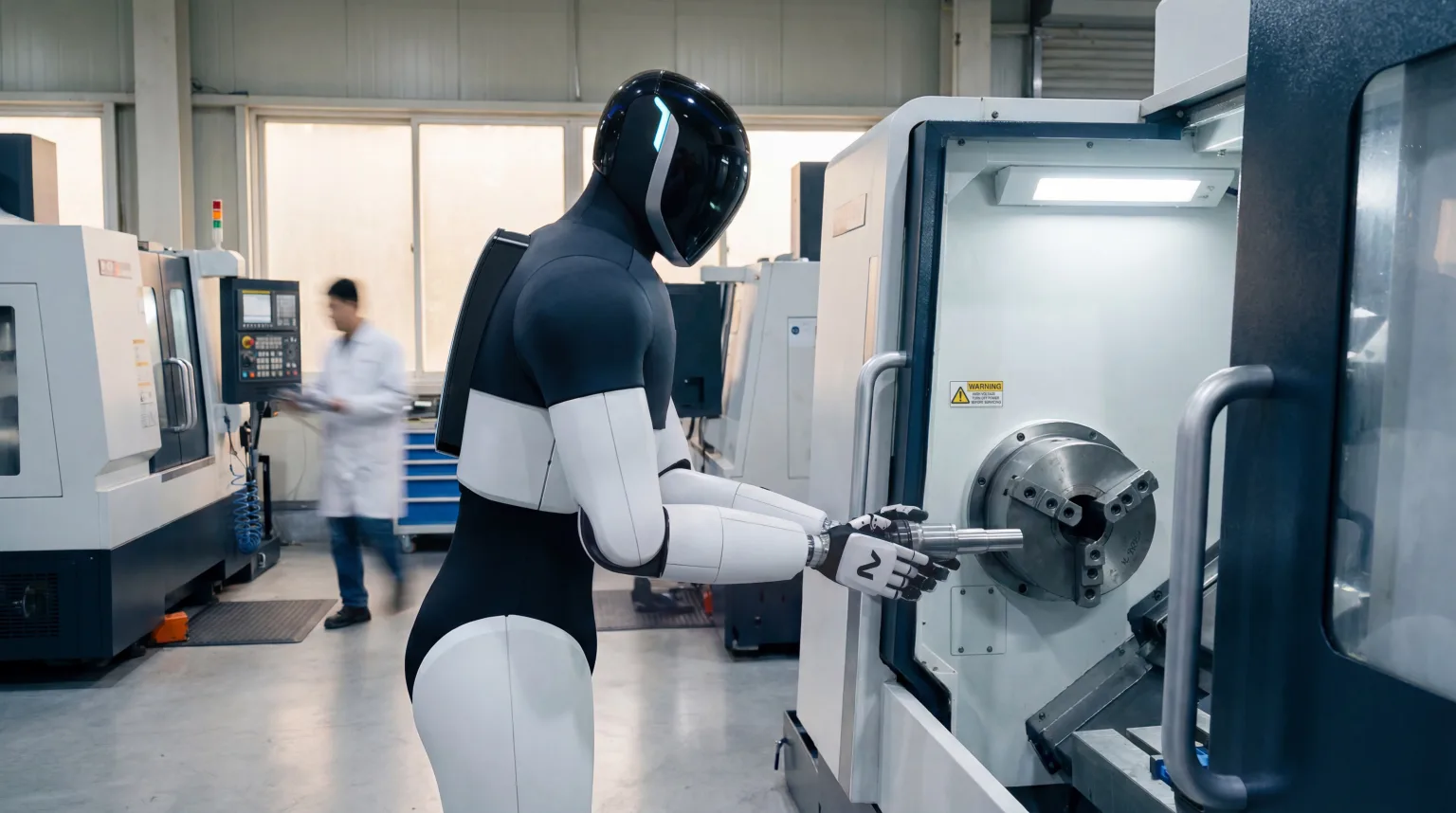
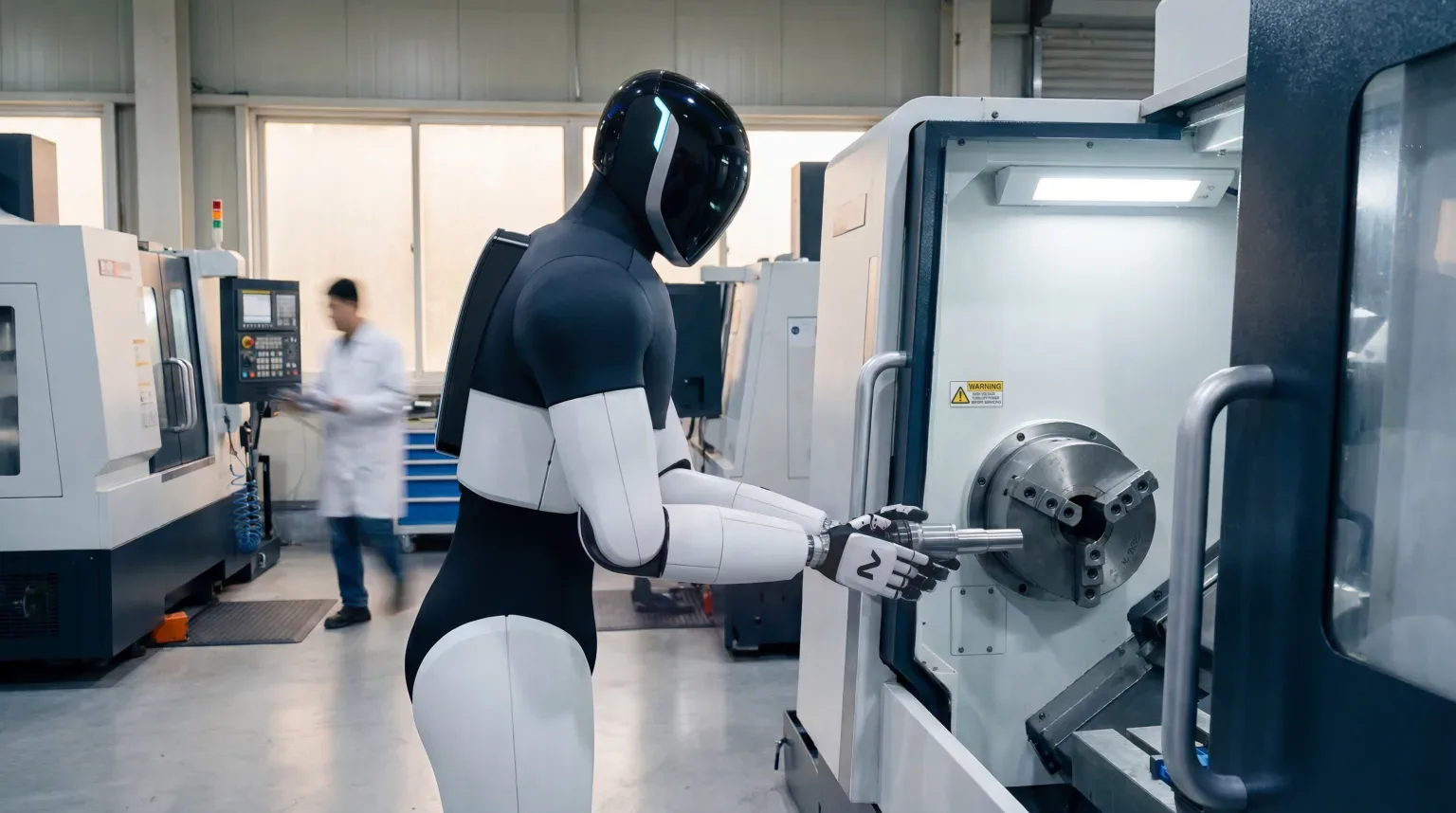
Unveiled at automatica, the 1.8m, 80kg 4NE-1 carries up to 15kg and leans on Neura's cognitive stack to handle real industrial tasks — its pitch being a humanoid affordable enough to actually deploy at scale.
The 4NE-1 humanoid — Neura's bid to put a cognitive robot on the factory floor.
Neura joined Nvidia's humanoid robot developer program alongside Figure, Agility and Boston Dynamics — rare validation that put a European name on the short list of serious humanoid builders.
An entirely European investor group backed the cognitive-robotics thesis, funding the jump from collaborative arms toward a full humanoid.
Round
Series A
Raised
$55M
launch
Out of stealth with MAiRA, billed as the first cognitive cobot
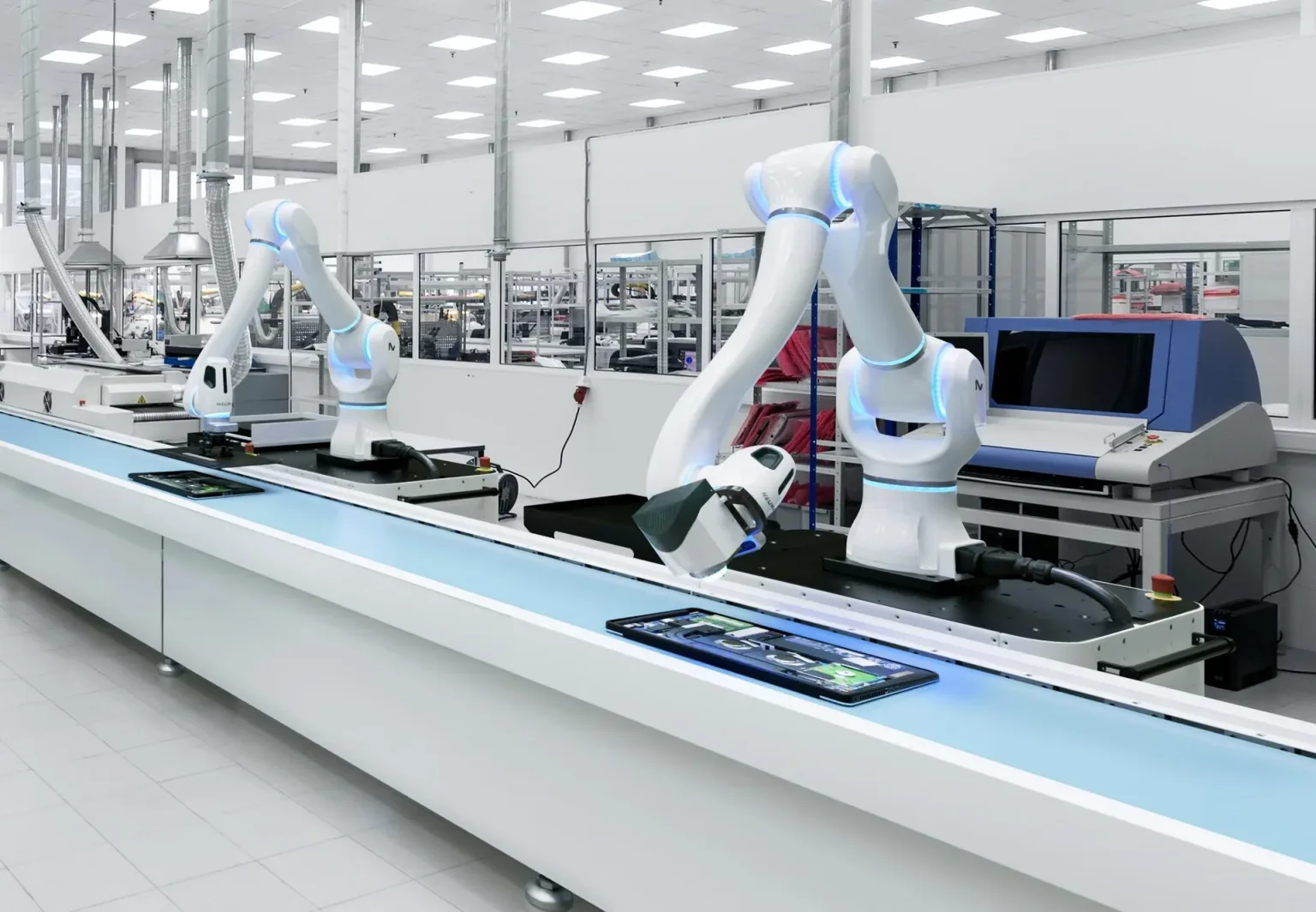
Neura emerged publicly with MAiRA — a collaborative arm with vision, touch and voice built in, pitched as the first market-ready robot that could perceive its surroundings instead of needing safety cages and fixed scripts.
MAiRA arms on a line — perception built into the robot, no safety cage required.
David Reger founds Neura on a bet the rest of the industry doubted
Reger set out to build robots that sense, perceive and reason rather than blindly repeat programmed motions — coining the term "cognitive robotics" for a category most of the industry didn't yet believe in.
Founder and CEO David Reger, who coined the term "cognitive robotics".


%20--%3e%3csvg%20version='1.1'%20id='Layer_1'%20xmlns='http://www.w3.org/2000/svg'%20xmlns:xlink='http://www.w3.org/1999/xlink'%20x='0px'%20y='0px'%20viewBox='0%200%20510.4%20394.89'%20style='enable-background:new%200%200%20510.4%20394.89;'%20xml:space='preserve'%3e%3cpath%20d='M398.64,169.99l-72.42,126.17L182.17,49.95l0,0C164.87,20.44,132.39,0.9,95.43,2.11C42.92,3.83,1.94,48.46,1.94,101.01%20l0,278.02c0,2.26,2.42,3.7,4.41,2.62l89.58-48.8c1.81-0.99,2.94-2.88,2.93-4.94L98.68,98.8l144.11,246.17l0,0%20c16.8,28.63,47.88,47.87,83.48,47.87c14.23,0,27.75-3.08,39.91-8.6c22.69-10.3,37.48-30.79,50.1-52.78l91.78-159.91%20c1.16-2.02-0.3-4.53-2.62-4.53l-101.67,0C401.65,167.02,399.69,168.15,398.64,169.99z'/%3e%3c/svg%3e)
 HV Capital