Prior Labs— Foundation models for tabular and structured data.
Prior Labs builds foundation models for the structured data that runs businesses. Its open TabPFN models make accurate predictions on tables, spreadsheets, and databases in a single forward pass — in seconds, without task-specific training.
Notable milestones from Prior Labs’s journey — funding rounds, launches, and other moments worth knowing.
launch
TabPFN-3.5 Thinking scales frontier tabular prediction to 1M rows
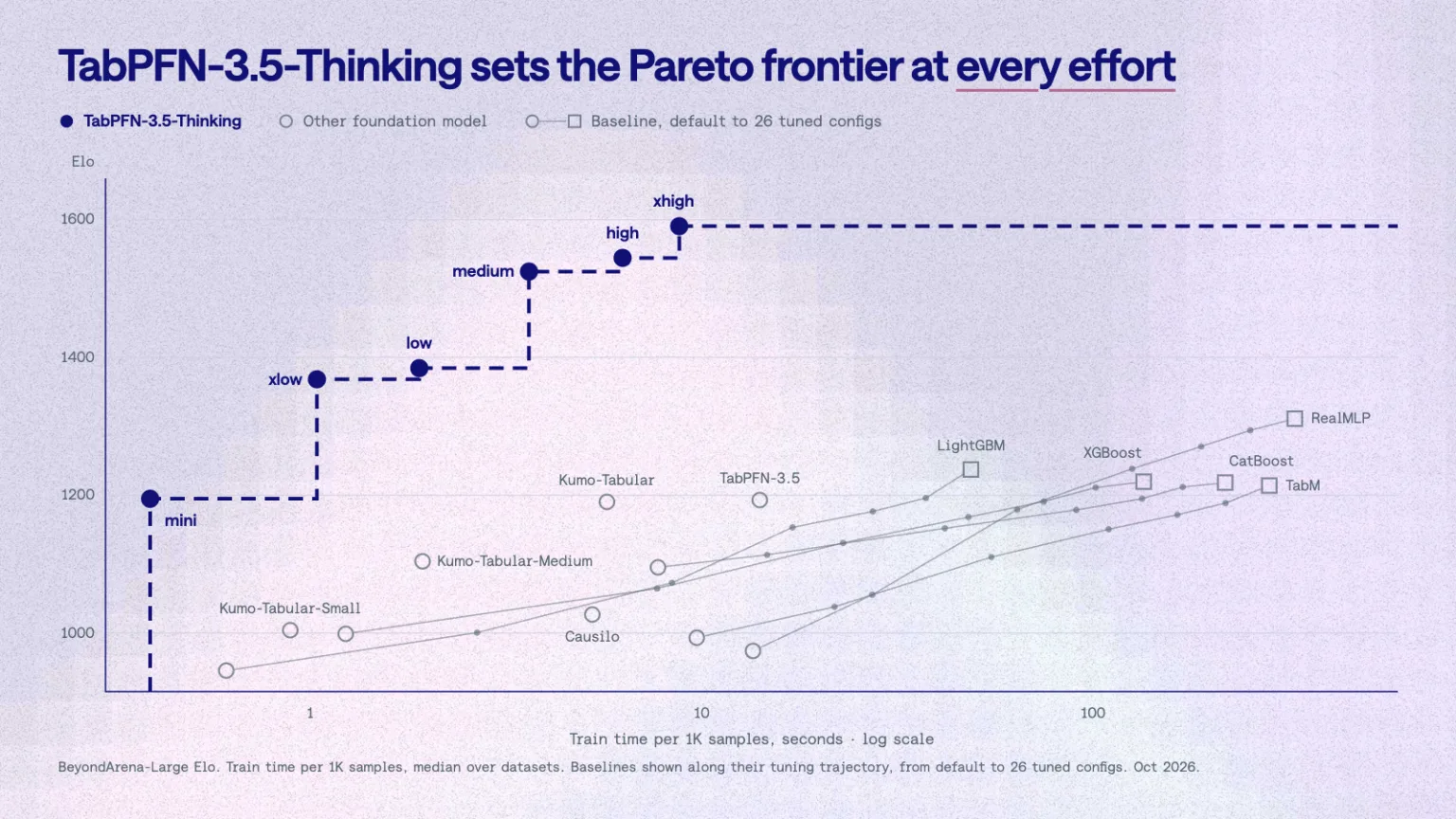
Prior Labs expanded TabPFN-3.5 Thinking from 200,000 to one million fitting rows and reported that its new effort variants outperformed every compared foundation and traditional model across BeyondArena's data slices. The API-only release made its higher-compute prediction mode practical for larger forecasting and planning datasets.
Prior Labs' BeyondArena-Large comparison placed its Thinking variants above the published baseline frontier across effort levels.
SAP made Prior Labs' TabPFN-3.5 Plus available in SAP AI Core, putting its tabular foundation model directly into enterprise prediction workflows. The model handles raw, mixed and incomplete structured data without training or tuning, extending Prior's technology from research releases into SAP's production AI platform.
TabPFN-Rel takes Prior's foundation model from tables to databases
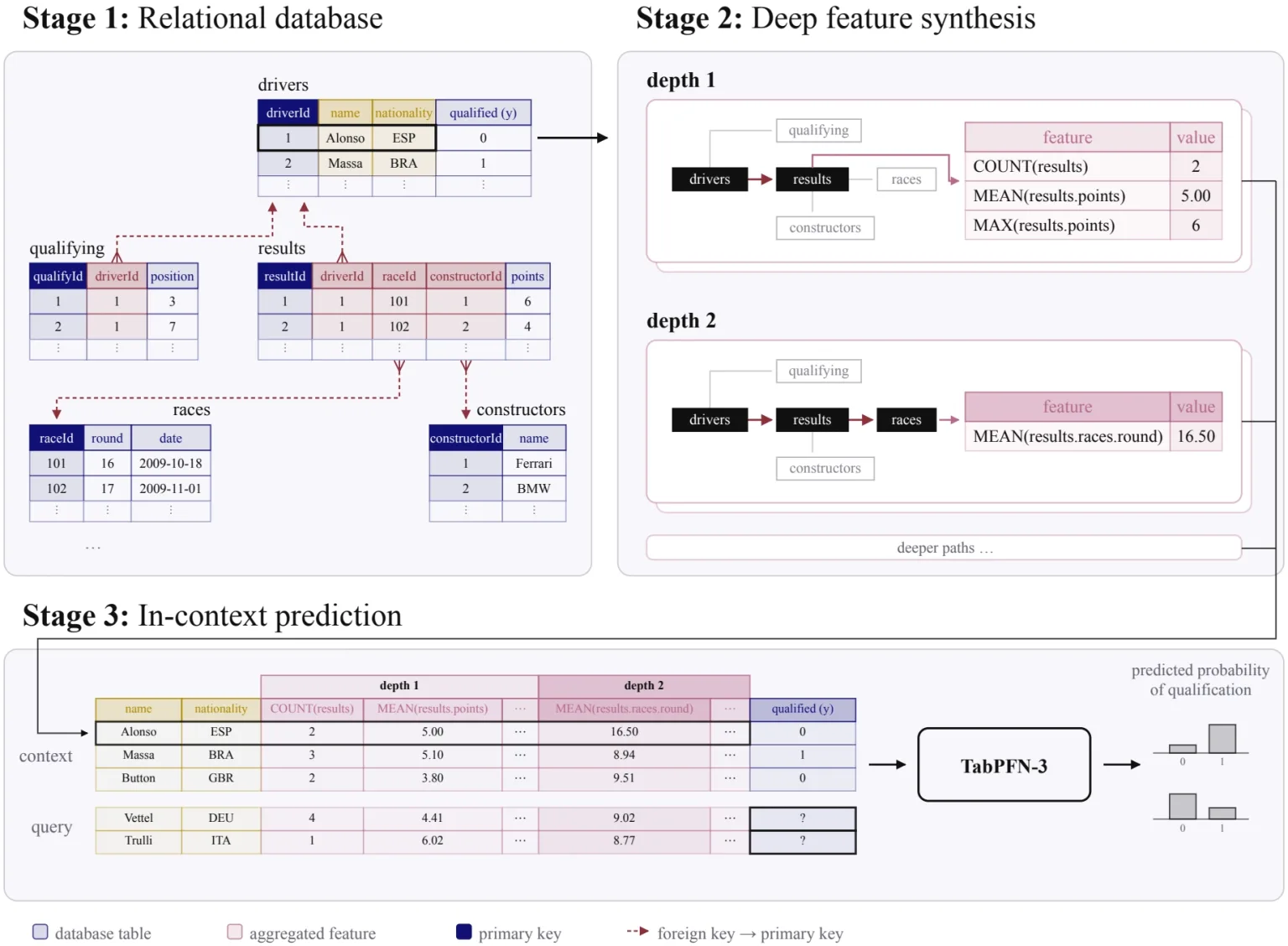
Prior Labs open-sourced RelArena-alpha, TabPFN-Rel and RPI-alpha to make relational-machine-learning results comparable and usable on real databases. TabPFN-Rel automated the joins and feature synthesis that turn linked tables into a TabPFN-3 prediction task, ranking first among model submissions in the new benchmark.
TabPFN-Rel joins and aggregates linked database tables before making in-context predictions with TabPFN-3.
Prior splits commercial and research leadership between co-CEOs
Sauraj Gambhir became co-CEO for partnerships, growth, customer relationships, finance and operations, while Frank Hutter became co-CEO for research. The change formalised the founders' existing division of work as Prior Labs scales its commercial business and multi-year research programme inside SAP.
Frank Hutter and Sauraj Gambhir became co-CEOs; Noah Hollmann continues as CTO.
SAP completed its acquisition of Prior Labs 18 months after the Freiburg lab was founded. Prior Labs kept its brand, leadership, research agenda and open-model commitment, while SAP's €1B-plus four-year investment added the infrastructure and hiring runway to pursue long-term tabular-AI research.
Germany's Federal Cartel Office cleared SAP's purchase of Prior Labs in its initial merger-control review. The decision removes the regulatory condition on SAP's plan to keep the Freiburg lab independent while investing more than €1B over four years in tabular foundation models.
Eighteen months after founding, SAP agreed to buy the lab — reportedly an ~$1.16B deal — and pledged to invest more than €1B over four years to scale it into a European frontier AI lab for structured data, with Prior Labs continuing to operate independently.
A new "Scaling Mode" removed TabPFN's size ceiling, extending it to enterprise datasets of up to 10 million rows. By then the open model had passed 2.3M downloads and was in production at firms including Hitachi and major global banks.
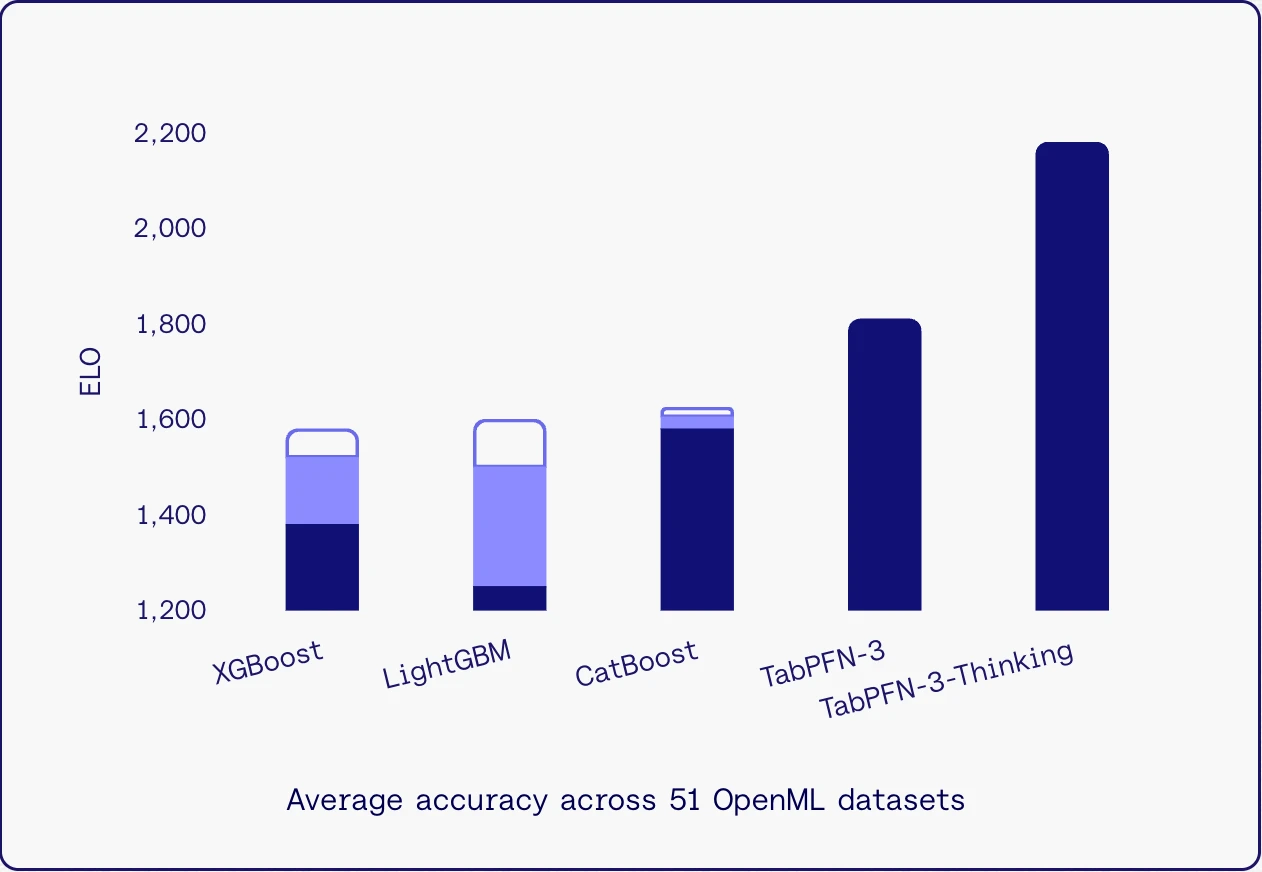
The 2.5 release handled 20× more data cells than its predecessor — up to 50,000 rows and 2,000 features — matching the accuracy of heavily tuned AutoGluon and tree-based models while still running in a single forward pass.
Balderton led a €9M ($9.3M) pre-seed, joined by XTX Ventures, SAP co-founder Hans-Werner Hector's Hector Foundation, and Atlantic Labs — plus angels including Hugging Face's Thomas Wolf, Black Forest Labs' Robin Rombach, and Silo AI's Peter Sarlin.
TabPFN lands in Nature — 2.8 seconds beats 4 hours of tuning
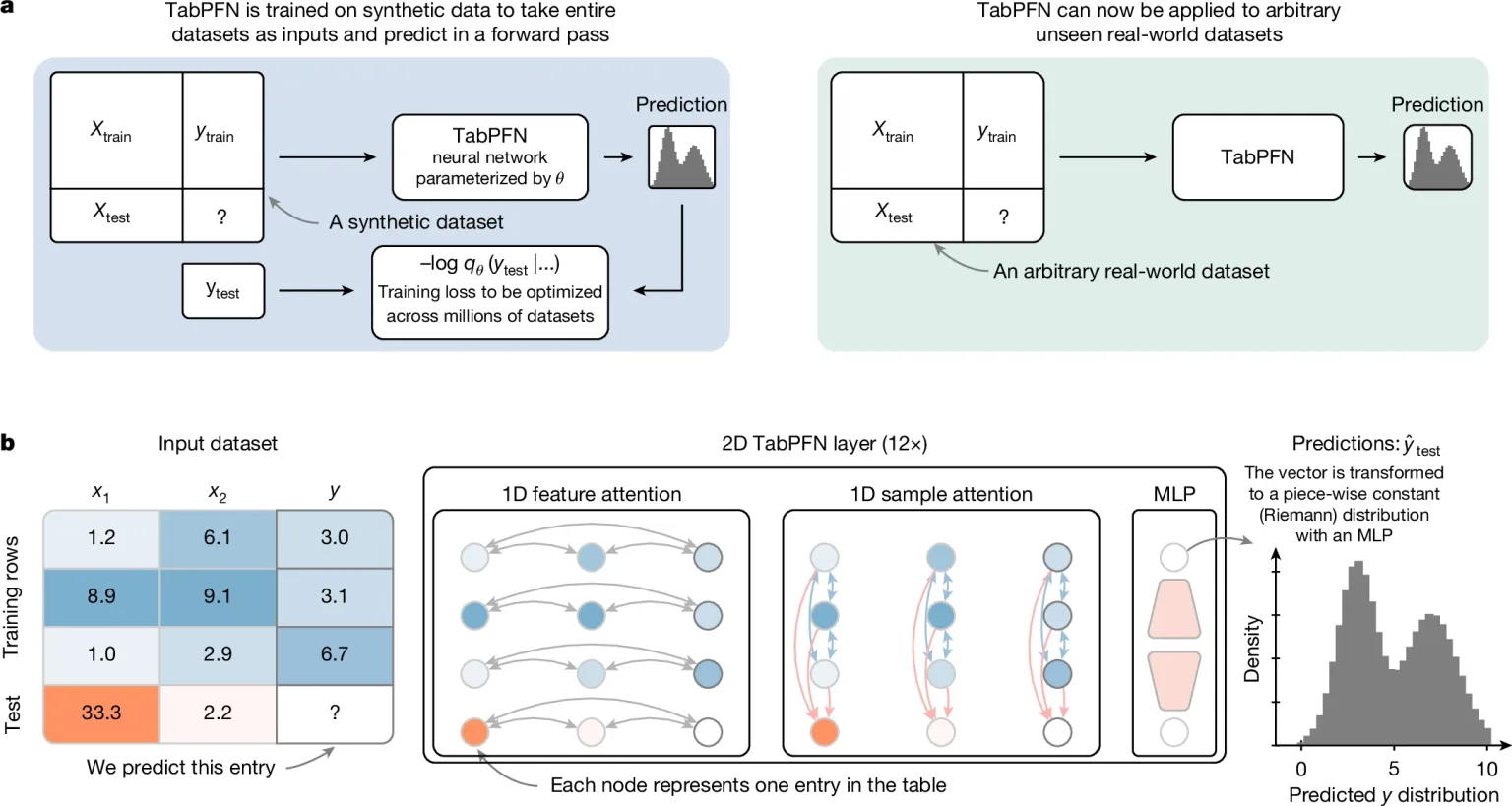
Published in Nature, TabPFN is a transformer trained on millions of synthetic datasets that predicts on small tables in a single forward pass. In 2.8 seconds it outperformed an ensemble of the strongest baselines tuned for four hours — the first true foundation model for tabular data.
How TabPFN works: pre-trained on millions of synthetic tables, then applied to any real dataset in one forward pass.
Spun out of Freiburg by AutoML's most-cited researcher
Frank Hutter — the world's most-cited AutoML researcher — left academia with Noah Hollmann and Sauraj Gambhir to commercialise TabPFN, the tabular foundation model born in his lab at the University of Freiburg, with ELLIS/Max Planck director Bernhard Schölkopf among the founding advisors.
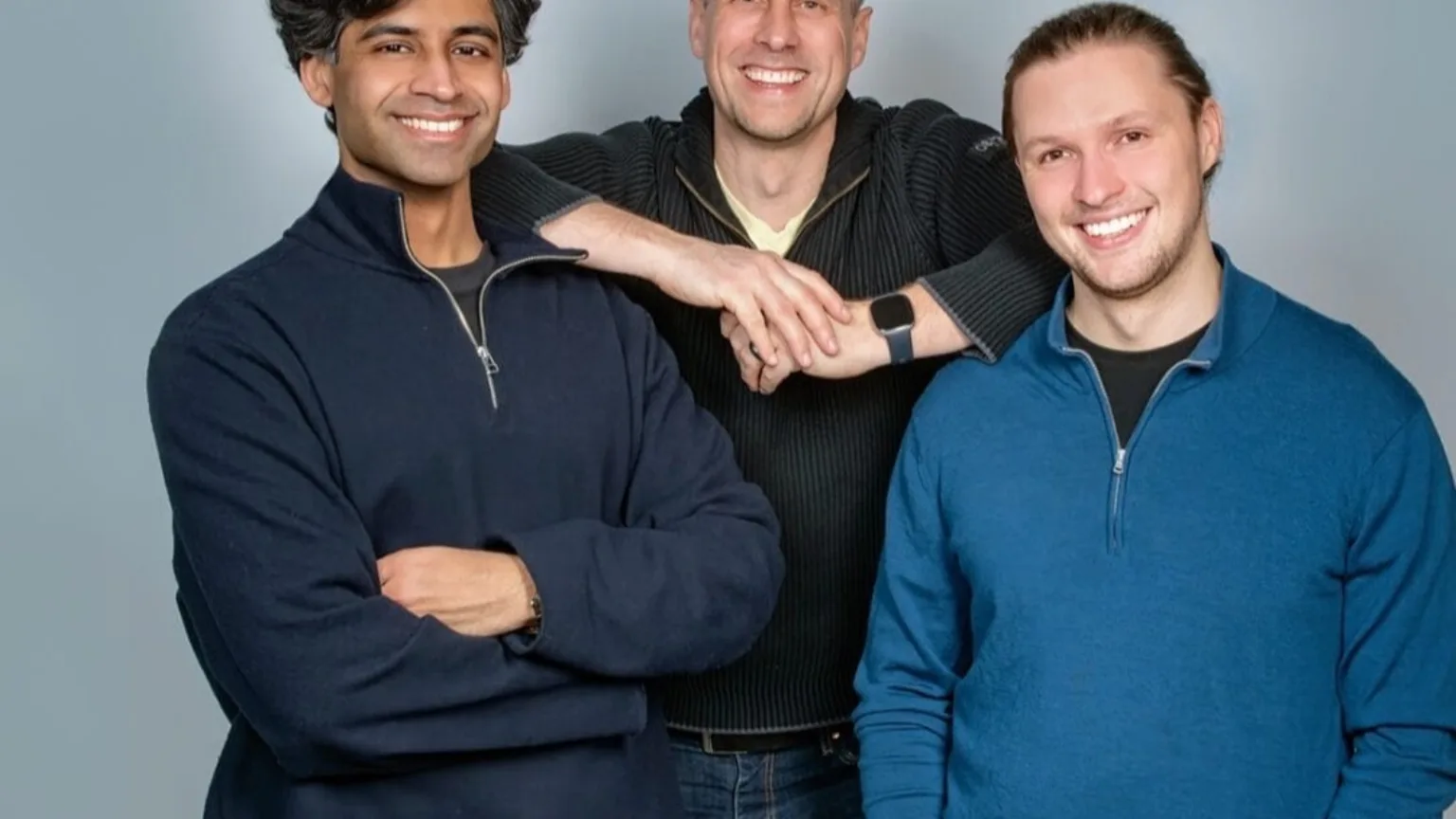
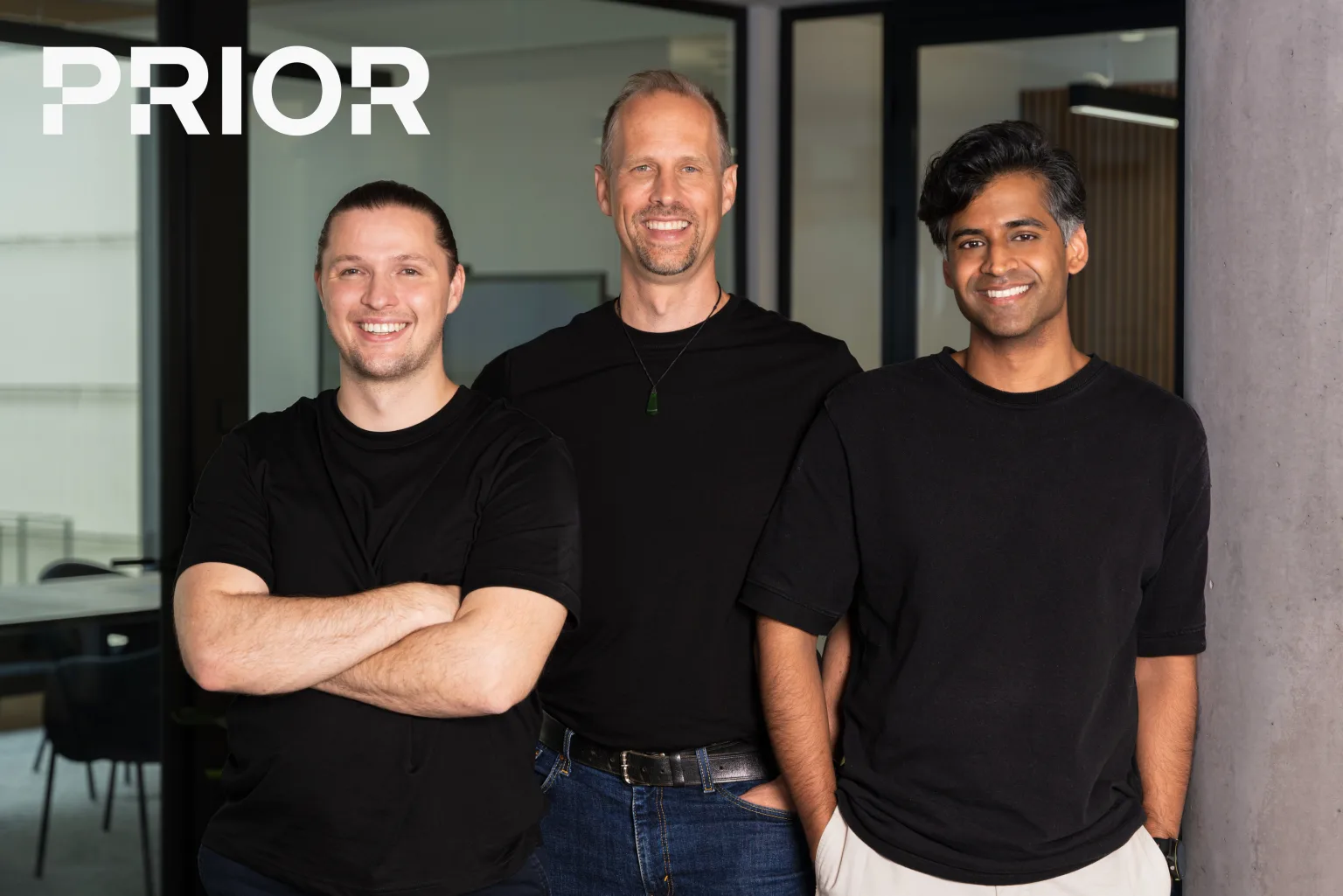
Co-founders Sauraj Gambhir, Frank Hutter, and Noah Hollmann.



 Balderton Capital